


 Customer Login
 Reviews
Drain Flies, Fruit Flies, and Phorid Flies: How to Identify and Get Rid of Them
September 29, 2026
Finding small flies in your house can be frustrating, especially when they seem to appear overnight. Small flies around kitchen sinks, bathrooms, drains, garbage disposals, fruit bowls, and houseplants can actually be several different pests. Drain flies, fruit flies, phorid flies, and fungus gnats can look similar at first, but their habits and breeding sites are different.
Identifying the type of fly you're dealing with is important because getting rid of the adult flies you see is only part of the solution. If the breeding source remains, the flies will keep coming back.
Finding small flies in your house can be frustrating, especially when they seem to appear overnight. Small flies around kitchen sinks, bathrooms, drains, garbage disposals, fruit bowls, and houseplants can actually be several different pests. Drain flies, fruit flies, phorid flies, and fungus gnats can look similar at first, but their habits and breeding sites are different.
Identifying the type of fly you're dealing with is important because getting rid of the adult flies you see is only part of the solution. If the breeding source remains, the flies will keep coming back.
Drain Flies vs. Fruit Flies vs. Phorid Flies
Although these small flies are often confused with one another, some noticeable differences can help you identify them.
| Fly | Appearance | Common Location | Typical Breeding Source |
|---|---|---|---|
| Drain Flies | Small, dark, fuzzy and moth-like | Sinks, showers, bathrooms and floor drains | Organic buildup and sludge inside drains |
| Fruit Flies | Tiny, smooth-bodied flies; often tan or brown with reddish eyes | Kitchens, pantries and areas near food | Overripe fruit, food waste and fermenting organic material |
| Phorid Flies | Very small, dark, hump-backed flies | Kitchens, bathrooms, drains and other damp areas | Decaying organic material, drains and sometimes plumbing or sewage-related sources |
| Fungus Gnats | Tiny, slender, mosquito-like flies | Around houseplants | Damp potting soil and decaying plant material |
How to Identify Drain Flies, Fruit Flies and Phorid Flies
What Do Drain Flies Look Like?
Drain flies, also called moth flies, are very small flies with fuzzy bodies and wings that give them a moth-like appearance. They are usually gray, dark gray, or black and are often seen resting on walls near sinks, showers, bathtubs, or floor drains.
Drain flies are relatively weak fliers and may spend much of their time sitting on nearby surfaces. If you repeatedly see small, fuzzy flies around a bathroom or kitchen drain, you may be dealing with drain flies.
What Do Fruit Flies Look Like?
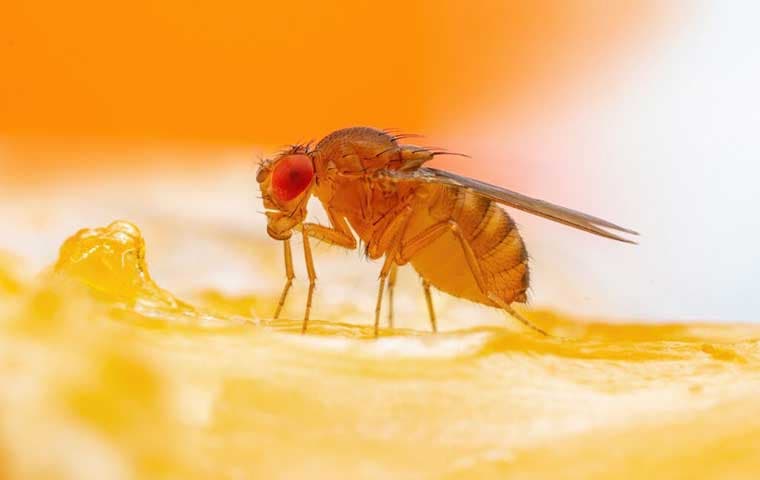
Fruit flies are tiny, smooth-bodied flies that are commonly found in kitchens. They may be tan, brown or yellowish, and many common fruit flies have noticeable reddish eyes.
Fruit flies are attracted to fermenting and overripe food. They can quickly multiply around fruit bowls, garbage cans, recycling containers, spilled drinks, food waste and garbage disposals.
What Do Phorid Flies Look Like?
Phorid flies are extremely small flies with a somewhat hump-backed appearance. One of their more noticeable behaviors is that they often run quickly across countertops, floors and other surfaces before taking flight.
Phorid flies can be associated with drains and decaying organic material. Persistent phorid fly problems can sometimes be associated with plumbing or sewage issues, particularly when normal cleaning does not resolve the infestation.
What Are Fungus Gnats?
Fungus gnats are another small flying pest that homeowners sometimes mistake for fruit flies. They are usually associated with houseplants rather than food or drains.
Fungus gnats commonly breed in damp potting soil where decaying organic material and fungi provide a suitable environment. If the flies seem to be concentrated around your plants, check the soil before assuming you have a fruit fly infestation.
Where Do Drain Flies, Fruit Flies and Phorid Flies Come From?
Finding the breeding source is one of the most important steps in getting rid of small flies. Adult flies may be easy to see, but the source of the infestation can be hidden.
Drain Fly Breeding Sites
Drain flies commonly develop in the organic buildup that accumulates inside drains and pipes. This material can include hair, soap residue, food particles and other organic matter.
Common locations include:
- Kitchen sinks
- Bathroom sinks
- Bathtub and shower drains
- Floor drains
- Garbage disposals
- Other infrequently used drains
Fruit Fly Breeding Sites
Fruit flies are usually associated with fermenting or decaying food and other organic material. A small amount of food residue can provide enough material for fruit flies to reproduce.
Check for:
- Overripe or rotting fruit
- Food scraps
- Garbage and recycling bins
- Spilled juice, soda or alcohol
- Dirty garbage disposals
- Sticky residue under appliances or containers
- Food debris in drains
Phorid Fly Breeding Sites
Phorid flies can develop in decaying organic material in damp locations. Drains, plumbing areas and other hidden sources can sometimes provide suitable breeding conditions.
If phorid flies continue to appear despite thorough cleaning, it may be necessary to investigate less obvious sources, including plumbing problems, leaks or sewage-related issues.
How to Get Rid of Drain Flies
If you're trying to get rid of drain flies, killing the adult flies you see is not enough. The breeding material inside the drain must also be removed.
1. Identify the Affected Drain
Look for flies around sinks, showers, bathtubs and floor drains. If you're not sure which drain is responsible, cover individual drains overnight with clear tape or another temporary covering and check for flies the next day.
2. Clean the Drain and Surrounding Area
Remove visible debris and organic buildup from the drain and clean the surrounding sink, tub or floor area. Garbage disposals should also be cleaned thoroughly.
3. Use an Appropriate Enzyme Cleaner
Enzyme-based drain cleaners can help break down organic material that may be supporting a drain fly infestation. Follow the product's directions carefully and remember that treating the drain does not address every possible source.
4. Check Infrequently Used Drains
Floor drains, guest bathrooms and other drains that are rarely used can sometimes be overlooked. Check these areas if flies continue to appear.
5. Look for Plumbing Problems
A persistent infestation may indicate a hidden source that normal cleaning cannot reach. Leaking pipes, damaged plumbing or sewage-related problems can create conditions where flies continue to breed.
How to Get Rid of Fruit Flies
Getting rid of fruit flies starts with removing whatever is attracting and supporting them.
- Throw away overripe or rotting produce.
- Clean food and drink spills.
- Empty and clean garbage and recycling containers.
- Clean your garbage disposal.
- Wipe down countertops and other food-preparation surfaces.
- Store produce properly and refrigerate it when appropriate.
- Clean drains where food residue may have accumulated.
- Use fruit fly traps to reduce the number of adult flies.
Traps can help reduce the visible population, but they won't eliminate an infestation if the breeding source remains.
How to Get Rid of Phorid Flies
Phorid flies can be more difficult to eliminate because their breeding source may be hidden. Start by checking drains, garbage disposals, trash areas, and other locations where organic material may be accumulating.
If cleaning doesn't solve the problem and phorid flies keep appearing, look for potential plumbing or moisture issues. A pest professional can help identify the source and determine whether additional inspection or treatment is necessary.
Do DIY Fly Traps Work?
DIY traps can be useful, particularly for fruit flies. A simple vinegar-based trap can attract and capture adult fruit flies, helping reduce the number of flies you see.
However, traps generally don't eliminate the source of an infestation. If flies continue to reproduce in a drain, garbage disposal, food waste or another hidden location, new adults will continue to emerge.
For that reason, traps are best used as part of a larger approach that includes finding and eliminating the breeding source.
When Should You Call a Pest Control Professional?
If you've cleaned your drains, removed potential food sources and eliminated obvious breeding areas but small flies continue to appear, there may be a source that is difficult to find or reach.
Professional pest control can be especially helpful when:
- The infestation keeps returning after cleaning.
- You can't identify the type of fly.
- Flies are appearing in multiple rooms.
- You suspect a hidden breeding site.
- You suspect a plumbing or sewage-related problem.
- DIY traps and cleaning haven't solved the problem.
Identifying the fly is only the first step. Finding and eliminating the source is what ultimately helps prevent the infestation from coming back.
Get Rid of Flies with Jury Pest Services
Small flies in your house aren't just annoying. When they keep appearing, they can indicate that there is a breeding source somewhere nearby. Whether you're dealing with fruit flies in the kitchen, drain flies around the bathroom or persistent phorid flies, finding the source is the key to solving the problem.
Jury Pest Services has been serving local communities for decades and can help identify the source of persistent fly problems and determine the appropriate treatment. Contact Jury Pest Services to schedule a fly inspection or use our free online contact form to get started.